
The excitement ran high due to the harmonic tone the piano produced giving it a 3D feeling that was experienced with the first prototype. It was decided to use a new piano that had a curve in the soundboard. Instinctively it was felt that would produce incredibly better results. The NASA scientists that had evaluated the granite bridge technology recommended getting more surface area to the soundboard. Based on that recommendation a Pyramid shape to the stone was utilized with the top cut off for the pin placements. The intention was to match the same slope of the Giza Pyramid to the bridge stone as close as possible.
Muscle Piano
Story & Clark Granite Piano Prototype #2
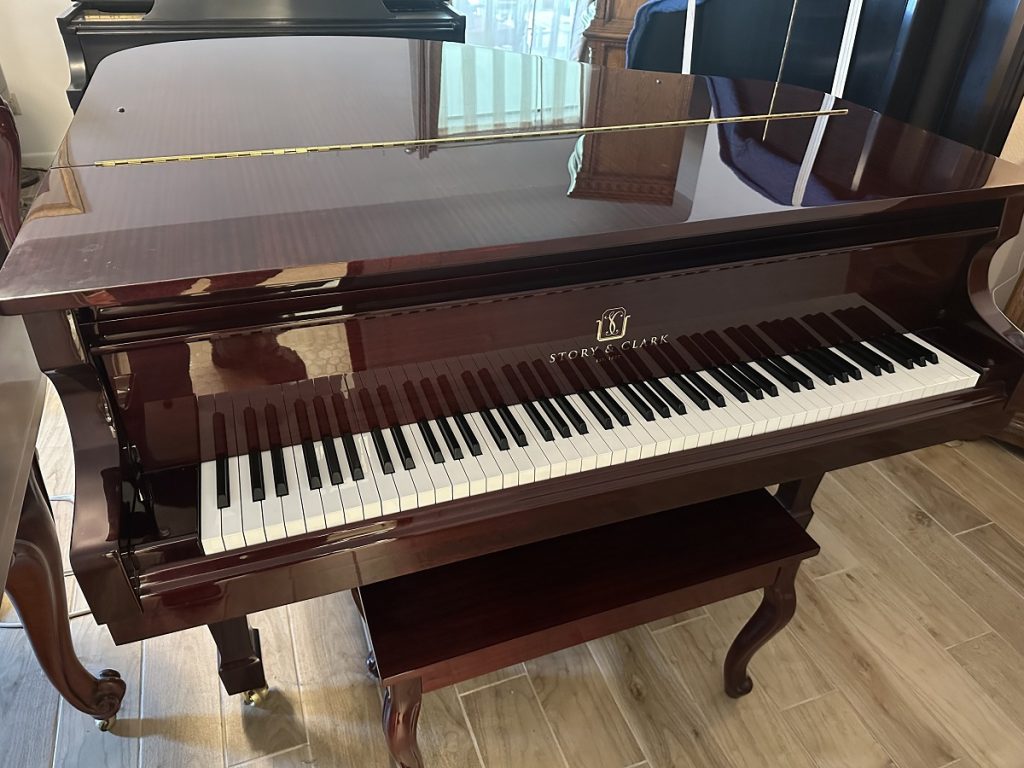

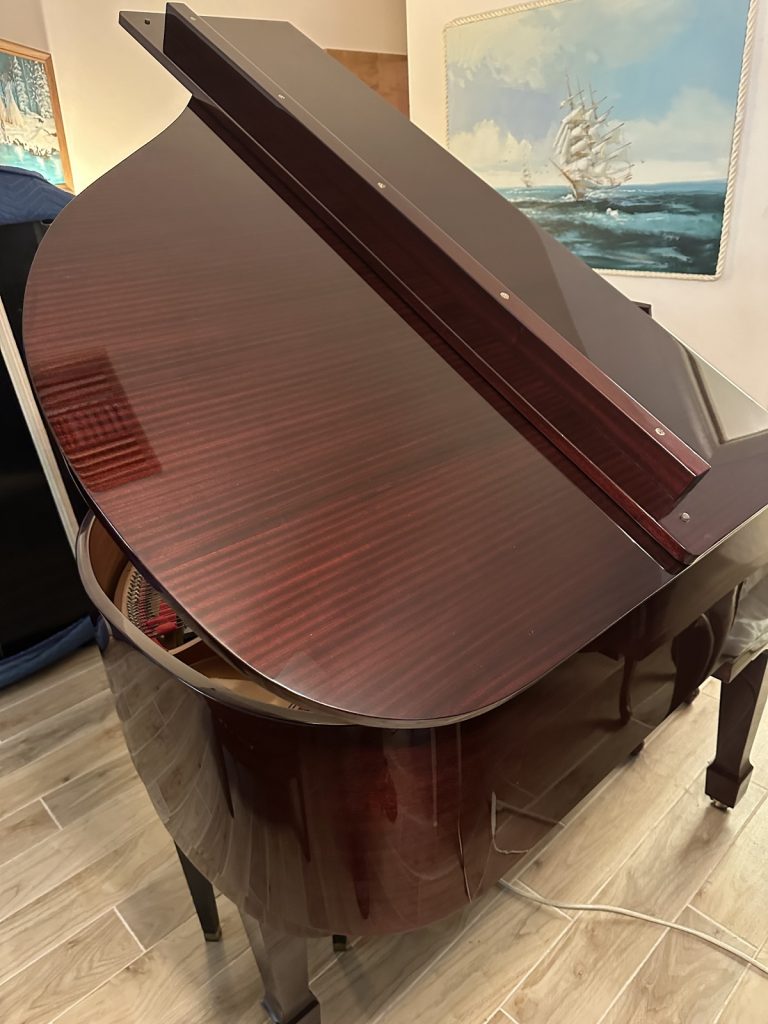
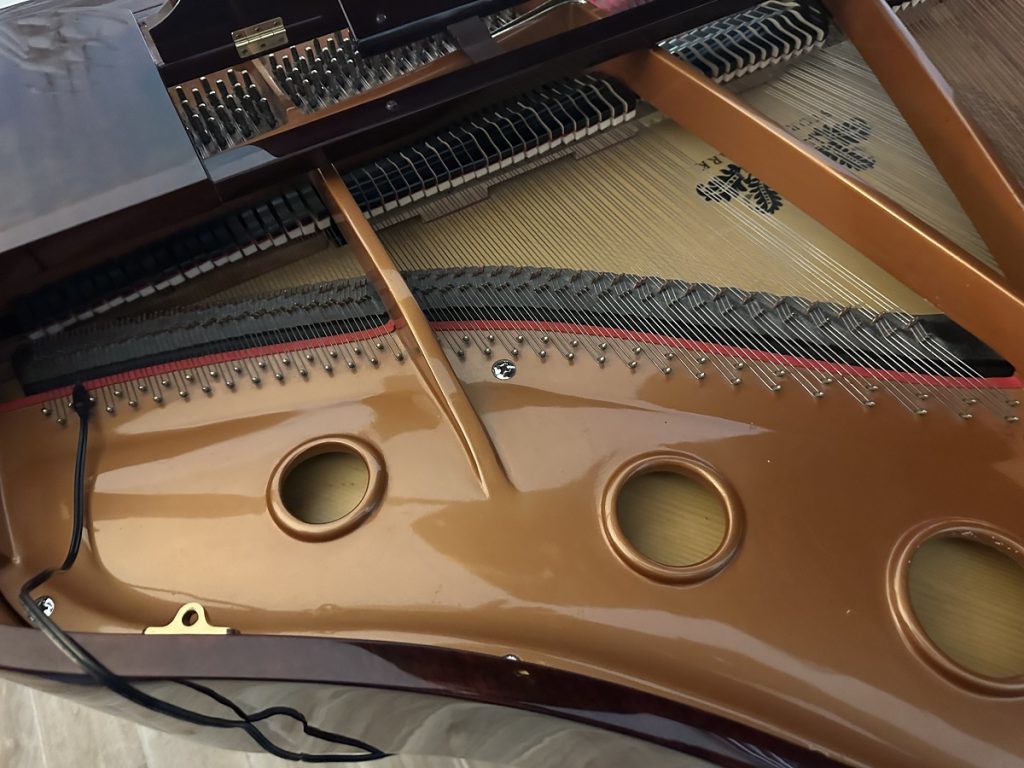
Changing the wood bridge to stone caused an increase in the bridge's weight. The amount of stone was doubled without increasing the number of ribs under the piano to support the extra weight. Over a three - month period the bridge cracked three different times and was repaired with glue. It did diminish the healing effects slightly as a result, but the incredible sound was unaffected.
The unexpected healing effects of this prototype were related to muscle issues. This was consistently experienced by many different people, and hence this prototype was named The Muscle Piano.
A professional pianist played and evaluated this prototype. As a result of his assessment, dampers were added to the last 20 treble notes which is not normally done as the notes normally die out quickly. This is the first piano, that we know of, that demanded 88 dampers instead of the standard 67!
Basically, this piano caused us to rethink our original goal of producing a great sounding piano. We had no clue that a piano would be capable of healing was even possible. Our original desire to make a good sounding piano expanded to include healing qualities. Since this door with infinite opportunities mysteriously appeared, it was termed "the accidental technology".